Tank Water Heater Services in Westchester County, NY
A tank water heater should keep enough hot water ready for the way your household actually uses it, from morning showers to laundry and dishes later in the day. Yost & Campbell offers tank water heater services in Westchester County, NY for repair, maintenance, installation, replacement, gas and electric equipment, and the supporting plumbing components that help the system operate safely and consistently.
Call (914) 200-3275 or contact us online to schedule tank water heater service in Westchester County, NY.
Stored Hot Water Still Makes Sense for Many Westchester Homes
Many Westchester households still rely on a storage tank, which holds a fixed volume of heated water so it is ready the moment a faucet opens. That setup suits homes with steady daily routines, existing gas or electric connections, and a utility space built around a tank.
Performance still depends on more than gallon capacity. Burner or heating-element condition, sediment, thermostat operation, water pressure, plumbing connections, and recovery rate all affect how much usable hot water reaches the fixtures.
What Our Tank Water Heater Services Cover
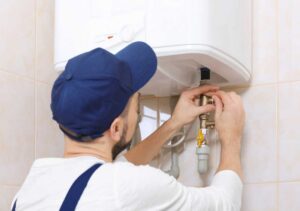
We work with tank systems from initial installation through maintenance, repair, and eventual replacement. Whatever the job, you hear what we found and review the price before any approved work starts.
Our tank water heater services include:
- Water heater repair: Find the cause behind no hot water, slow recovery, swinging temperatures, leaks, and unusual sounds from the tank.
- Tank water heater installation: Pick the right storage unit for your household’s hot-water habits, the space available, the fuel you have, and the existing plumbing.
- Water heater replacement: Retire a tank that is aging, leaking, or corroded and put in a properly sized replacement once further repairs stop paying off.
- Gas water heater services: Service gas-fired tanks, including burners, controls, venting-related components, and hot-water performance.
- Electric water heater services: Test elements and thermostats, trace breaker trips and wiring concerns, and look into temperature complaints.
- Tank flushing: Remove accumulated sediment when appropriate to help maintain capacity and normal heating performance.
- Thermostat and control service: Check temperature controls when water runs too hot, too cool, or changes unexpectedly.
- Leak evaluation: Determine if water is escaping from the tank body, relief valve, drain valve, fittings, or another plumbing connection.
- Expansion tank services: Evaluate pressure-control equipment connected to the water heater and service it when needed.
- Capacity planning: Match replacement equipment to household size, peak demand, recovery needs, and the way hot water is used throughout the day.
- Alternative system comparisons: Compare storage equipment with a tankless water heater or heat pump water heater when a different approach may fit the home better.
What We Check When the Tank Stops Keeping Up
The symptom helps narrow the diagnosis. A system producing no hot water at all points us toward different components than a tank that heats normally but runs cold much sooner than it used to.
Depending on the equipment, we may inspect burners, heating elements, thermostats, electrical connections, valves, sediment conditions, venting, tank condition, and plumbing connections. That helps separate a repairable component failure from a tank that is nearing the end of dependable service.
Gas and Electric Tanks Fail in Different Ways
A gas water heater uses a burner to heat the stored water, so ignition, combustion controls, venting, and gas supply can all affect performance.
An electric water heater commonly uses upper and lower heating elements controlled by thermostats. One failed element can leave the household with some hot water, which can make the problem less obvious than a complete shutdown.
Both types can also suffer from tank corrosion, sediment buildup, leaking valves, or deteriorated plumbing connections.
Sediment Can Quietly Reduce the Tank You Thought You Had
Minerals can settle at the bottom of a storage water heater over time. As that layer grows, the system may become noisier, lose usable capacity, or take longer to recover.
Flushing can help manage buildup when the tank condition supports it. Regular inspection also gives us a chance to look for corrosion, leaking connections, pressure problems, and other changes that may not be obvious during normal daily use.
Why the Expansion Tank Deserves Attention Too
Some plumbing systems use an expansion tank to help manage pressure changes as water heats and expands.
If that component fails or the plumbing system is dealing with excess pressure, the water heater and nearby valves or connections can experience additional stress. Checking the supporting plumbing can therefore be just as important as looking at the tank itself when pressure-related symptoms keep returning.
Routine Care Through the Comfort Club
Comfort Club plumbing members get one annual water heater flush and home plumbing inspection, plus priority service, savings on plumbing repairs, and no overtime fees.
That scheduled visit gives homeowners an opportunity to keep track of tank condition, sediment, valves, connections, and other gradual changes instead of waiting until hot water disappears or the tank begins leaking.
Westchester County Tank Water Heater FAQs
Why does my water heater run out of hot water halfway through a shower?
A burned-out element, a weak burner, a faulty thermostat, or sediment crowding the bottom of the tank can each cut the supply short. The unit’s age and condition point us toward the likeliest cause.
How long does a tank water heater usually last?
Gas tanks commonly last about 8 to 12 years and electric tanks about 10 to 15, though water quality, sediment, maintenance, and household use shift those numbers. Leaks, corrosion, and repeat repairs tell us more than the calendar.
Is a leaking water heater always a replacement?
That depends on the source. A leaking valve, fitting, or connection can often be repaired, but water seeping from the tank body usually means the inside has deteriorated, and replacement is the usual answer.
Should I choose gas or electric when replacing a tank water heater?
Existing utilities, installation space, household demand, venting, electrical capacity, and operating preferences all matter. We can compare both options when the home can support more than one energy source.
How do I know if my tank is large enough?
Tank size should reflect household hot-water demand and how often several fixtures or appliances need hot water at the same time. Repeatedly running out of hot water can mean the current capacity is too small, though equipment problems should be ruled out first.
Water Heater Commitments That Continue After Installation
Yost & Campbell has been serving Westchester since 1939. Customers can count on trained, certified technicians, more than 4,900 highly rated reviews, and 24-hour emergency service.
The Super Seven Guarantee includes water-heater-specific commitments. Yost & Campbell guarantees an installed water heater will heat water to 120°F and commits to service within 24 hours if a qualifying purchased water heater fails during the first year.
Tank Water Heater Service Throughout Westchester County
Westchester homes include older basements, utility rooms changed through multiple renovations, gas-fired equipment, electric tanks, and plumbing systems from several construction eras. Those differences can affect equipment size, venting, electrical requirements, water pressure, and the replacement path that makes sense.
We also serve homeowners in Rye, Bronxville, Eastchester, and Port Chester. Our service area gives our team experience with tank water heaters across a broad mix of home ages and plumbing setups.
Keep the Tank Reliable Before Hot Water Becomes an Emergency
Storage water heaters usually work quietly enough that gradual changes are easy to ignore. Yost & Campbell can repair the tank you have, keep it maintained, install new equipment, or help you plan replacement when leaks, corrosion, or repeated performance problems show that the system is reaching that point.
The right next step may be a repair, a flush and inspection, or a new gas or electric tank sized around the household you have today. Knowing what the equipment is actually doing gives you a better decision than waiting until the tank fails completely.
Call (914) 200-3275 or contact us online to schedule tank water heater services in Westchester County, NY.


